How an ice dam actually forms
An ice dam is a three-step cycle, and every step depends on temperature difference, not just cold weather. First, heat from inside the house leaks up into the attic and warms the underside of the roof deck above the living space, enough to melt the bottom layer of snow sitting on it even while the air outside stays well below freezing. Second, that meltwater runs down the roof under the snow blanket until it reaches the eave — the lower edge of the roof, usually past the exterior wall line, with no heated space underneath it, so it sits at outdoor air temperature. (Houses with little or no overhang get ice dams too; the cold zone is wherever the deck itself is below freezing, which on a cold day reaches well up the slope.) Third, the water refreezes right at that cold edge, because nothing is warming it there anymore. Refreeze after refreeze, that ice ridge grows, and eventually it's tall enough to back meltwater up behind it, where it can find its way under the shingles and into the roof deck rather than draining off the edge the way it's supposed to.
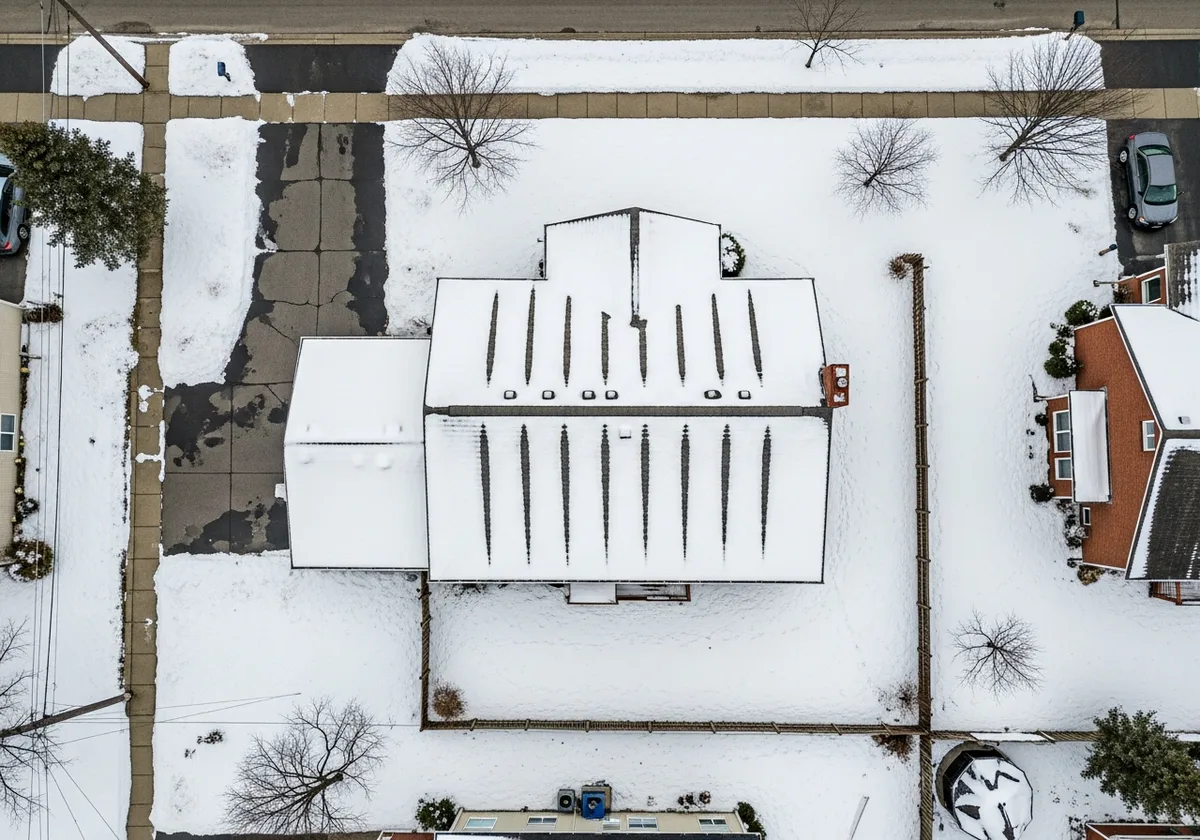
Three parts of the roof assembly, at three different temperatures
The whole mechanism comes down to three parts of the same assembly sitting at three different temperatures at once. Picture them as a system rather than three separate facts, because the imbalance between them is the actual cause.
| Part of the assembly | What's underneath it | Temperature in a snowstorm, relative to outdoor air |
|---|---|---|
| Main roof slope | Heated living space, with the attic between it and the deck | Warmer than outside air if attic heat is escaping upward |
| Eave overhang | No heated space — it extends past the exterior wall | Roughly outdoor air temperature |
| Attic itself | Insulation (or gaps in it) separating it from living space | Should track outdoor air closely in a well-insulated, well-ventilated attic |
Why one roof gets an ice dam and the neighbor's doesn't
Two houses on the same street, in the same storm, can end up in completely different situations, and the difference is usually what's happening in the attic rather than anything about the storm itself. The house with even attic temperatures close to the outdoor air keeps its whole roof close to one temperature, so snow just sits there and melts slowly and evenly, the way it's supposed to. The house next door, with attic heat escaping unevenly, ends up with a warm patch of roof deck sitting right above a cold eave, and that mismatch is the core of the problem. Attic heat isn't quite the whole story — on a cold, sunny day, solar gain alone can melt snow on even a well-insulated roof, and that meltwater still runs to a cold eave and can still refreeze there. But that's a smaller effect working on the same mechanism, and it isn't what separates the house with a bad ice-dam problem from the one without.
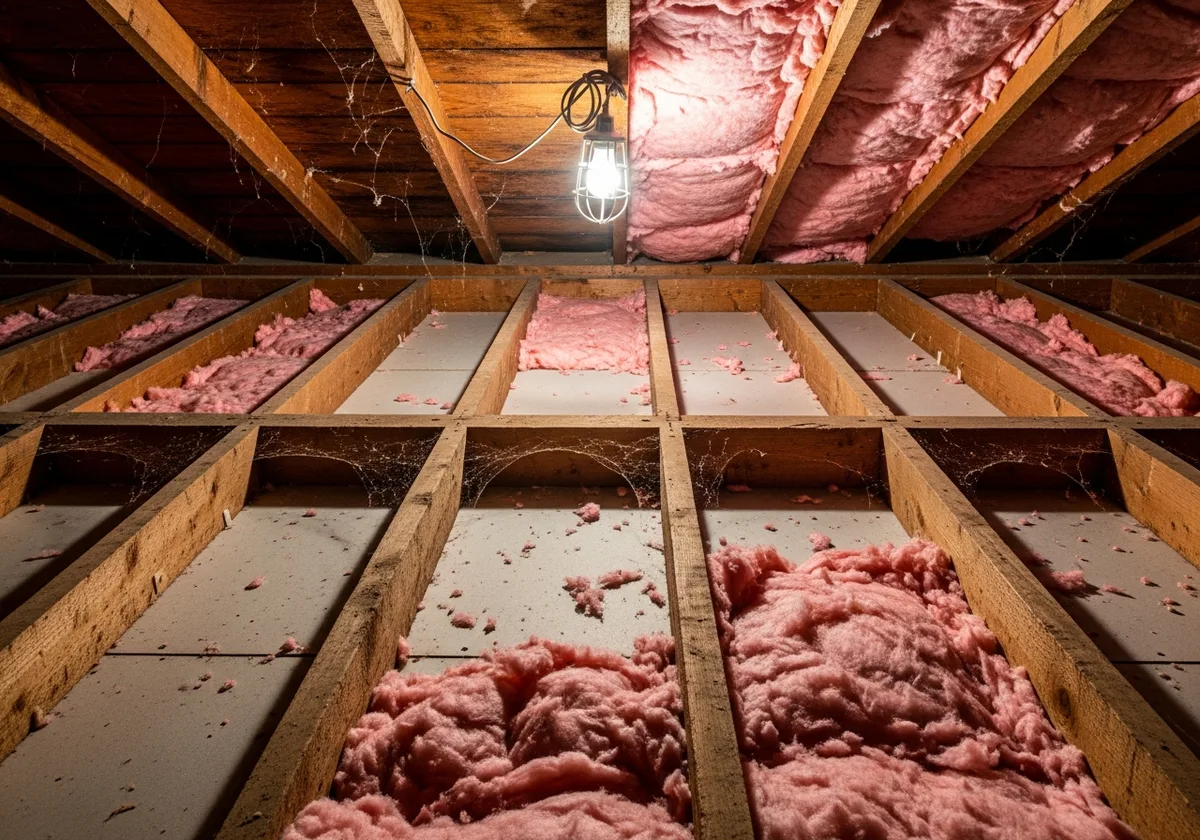
- Insulation depth and gaps — thin or unevenly distributed insulation lets more heat reach the roof deck, and gaps around recessed lights, attic hatches, and plumbing or chimney chases act as concentrated heat leaks even in an otherwise well-insulated attic
- Air leaks (bypasses), not just insulation — warm, moist household air rising through small gaps can carry as much heat into an attic as conducts through the insulation itself, and considerably more in a leaky ceiling, which is why air-sealing and insulation are usually discussed as a pair
- Ventilation balance — a soffit-to-ridge airflow path that actually works keeps the attic closer to outdoor temperature; blocked soffit vents (often from insulation stuffed too far into the eave) or a ridge vent with nowhere for air to enter both break that balance
- Roof shape and complexity — valleys, dormers, and any spot where two roof planes meet collects more snow and drains meltwater into a smaller area, concentrating the problem there even on an otherwise well-insulated roof
- And one factor that isn't about the house at all — how long snow sits, and how many freeze-thaw cycles it goes through. A single heavy snow that melts off quickly in a thaw causes less trouble than snow that sits for weeks through repeated swings across freezing, which is why the same house can have a bad ice-dam year and a mild one from one winter to the next
Why insulation and air-sealing are the actual fix
This is the part that gets skipped over in favor of more visible fixes, and it's the one that actually addresses the cause rather than the symptom. If the attic stays close to outdoor temperature, the whole roof stays close to one temperature too, and there's no warm patch to melt snow that then refreezes at a colder eave. Getting there is really two related jobs: adding enough insulation, distributed evenly, to slow the heat that reaches the roof deck through the ceiling; and air-sealing the bypasses — the attic hatch, recessed light housings, top plates, plumbing and duct penetrations — that let warm, moist air leak up and around the insulation rather than through it. Skip the air-sealing and extra insulation on top of leaky bypasses does less than it should, because the leaking air was never going through the insulation layer to begin with. This is genuinely a job worth having assessed by an insulation contractor rather than guessed at — recommended depths and the most effective sealing approach depend on your specific attic, climate zone and existing insulation, and a contractor can also spot bypasses that aren't obvious from a quick look with a flashlight.
Heat cables and roof rakes: useful, but not a fix
Both of these are real, reasonable tools, and both are frequently sold as if they solve the underlying problem when what they actually do is manage a symptom for a season. Heat cables run in a zig-zag along the eave and melt a channel through the ice so water has somewhere to drain instead of backing up under the shingles — that's genuinely useful during a bad storm, but it does nothing about the attic heat loss that caused the imbalance, it draws power every hour it runs, and it needs to go back up every year unless installed as a permanent fixture. Roof rakes pull snow off the lower few feet of roof from the ground, which reduces how much snow is available to melt and refreeze at the eave in the first place — a genuinely useful preventive step during a storm, and one of the few things a homeowner can safely do without getting on the roof. Neither one changes why the roof was warm in the first place. Think of them as damage control for this winter, and insulation and air-sealing as the fix for every winter after it.
Roof shapes and features that concentrate the problem
Some roofs are simply more exposed to this mechanism than others because of their shape, independent of how well-insulated the attic is. These are worth knowing about specifically, because they're often where a homeowner sees an ice dam despite reasonable attic performance everywhere else on the roof.
- Valleys — where two roof slopes meet, snow depth and meltwater both concentrate into a narrower channel, so ice can build up there even when the rest of the roof looks fine
- Dormers — the small roof sections and extra eaves a dormer creates are more exposed and often less well-insulated behind the walls than the main attic
- Skylights — a skylight shaft carries heat from the room below right up through the roof plane, often creating a warm patch and a local melt zone around it regardless of how the rest of the attic performs
- Low-slope sections and additions — a shallower pitch holds snow longer and drains meltwater more slowly than a steep slope, giving ice more time to build at the edge
- Where a taller section of roof meets a lower one — this is a drift-loading and runoff concentration point as much as a heat issue, since snow and meltwater both funnel toward it
What a professional assessment actually checks
If ice dams keep showing up in the same place winter after winter, a proper assessment beats guessing at insulation depth from a quick look through the attic hatch. An insulation contractor can run a blower-door test to find air leaks that aren't visible to the eye, and some use infrared thermal imaging on the roof during cold weather to spot the warm patches directly — a striking, unambiguous way to see exactly where heat is escaping. Separately, it's worth having a roofer confirm what's actually protecting the eave from the inside: in cold-climate areas that have adopted current codes, roofs built or re-covered since then generally require an ice-barrier membrane running from the eave edge to a point well inside the exterior wall line — that distance is the part that matters, since a membrane covering only the overhang does little against water backing up past the wall. Older roofs often predate the requirement entirely, so it's worth confirming what yours actually has rather than assuming. Knowing changes how urgently the insulation fix needs to happen versus how much of a buffer you already have if a dam does form.