What winter actually does to a roof — and when it's a claim.
Ice dams, snow load, freeze-thaw wear — some winter damage is a straightforward claim, some isn't. This guide covers all four, with a free check on your roof's own numbers.
Your free winter roof check
Address in, roof size + pitch + age + 2 years of NOAA winter history out — under 10 seconds.
✓ 100% free, no card required ✓ Report is yours to keep
- Winter storm historyWinter storms, blizzards, lake-effect snow, and ice storms — the dated events adjusters accept.
- Pitch & complexity readShallow-pitch and valley-heavy sections are where ice dams and snow load do the most damage.
- Roof age & conditionHow well your covering will hold up to a hard winter, estimated from current imagery.
- Claim-ready documentationThe measurements and storm dates you need before opening a winter-damage claim.
Two years of winter storm data, address-specific.
The free report pulls two years of NOAA storm history for your address — including winter, where NOAA recorded it. That's the difference between telling an adjuster the roof started leaking “sometime this winter” and naming the dated storm you're tying the claim to.
Winter storms, heavy snow, blizzards, lake-effect snow, and ice storms are included alongside the hail and wind reports. Two years is the window that matters, because it's roughly where most policies draw the line on how long after a storm you can still file.
How an ice dam actually forms.
An ice dam isn't caused by cold weather alone — it's caused by heat escaping from the house into the attic, warming the roof deck unevenly. Understanding that mechanism is the difference between treating the symptom every winter and fixing the cause once.
The cycle runs in three steps. Heat leaking up into the attic warms the underside of the roof deck above the living space, enough to melt the bottom layer of snow sitting on it even in freezing outdoor air. That meltwater runs down under the snow blanket until it reaches the eave — the lower edge of the roof, usually past the exterior wall line, with no heated space underneath, sitting at outdoor temperature. (Houses with little or no overhang get ice dams too; the cold zone is wherever the deck itself is below freezing.) There, with nothing warming it anymore, it refreezes. Refreeze after refreeze, the ice ridge grows, and once it's tall enough it backs water up behind it and pushes it under the shingles instead of off the edge where it belongs.
That's why two houses on the same street, in the same storm, can end up in completely different situations. The one with even attic temperatures close to outdoor air keeps its whole roof at roughly one temperature, so snow melts slowly and evenly the way it's supposed to. The one with attic heat escaping unevenly ends up with a warm patch of roof deck sitting right above a cold eave — and that mismatch is the core of the problem. (Solar gain on a cold, sunny day can melt snow on even a well-insulated roof, so attic heat isn't quite the whole story — but it's what separates the house with a chronic ice-dam problem from the one without.) Insulation depth, air-sealing around bypasses like recessed lights and attic hatches, and a working soffit-to-ridge ventilation path are what close that gap, and they're covered in full in the causes guide below.
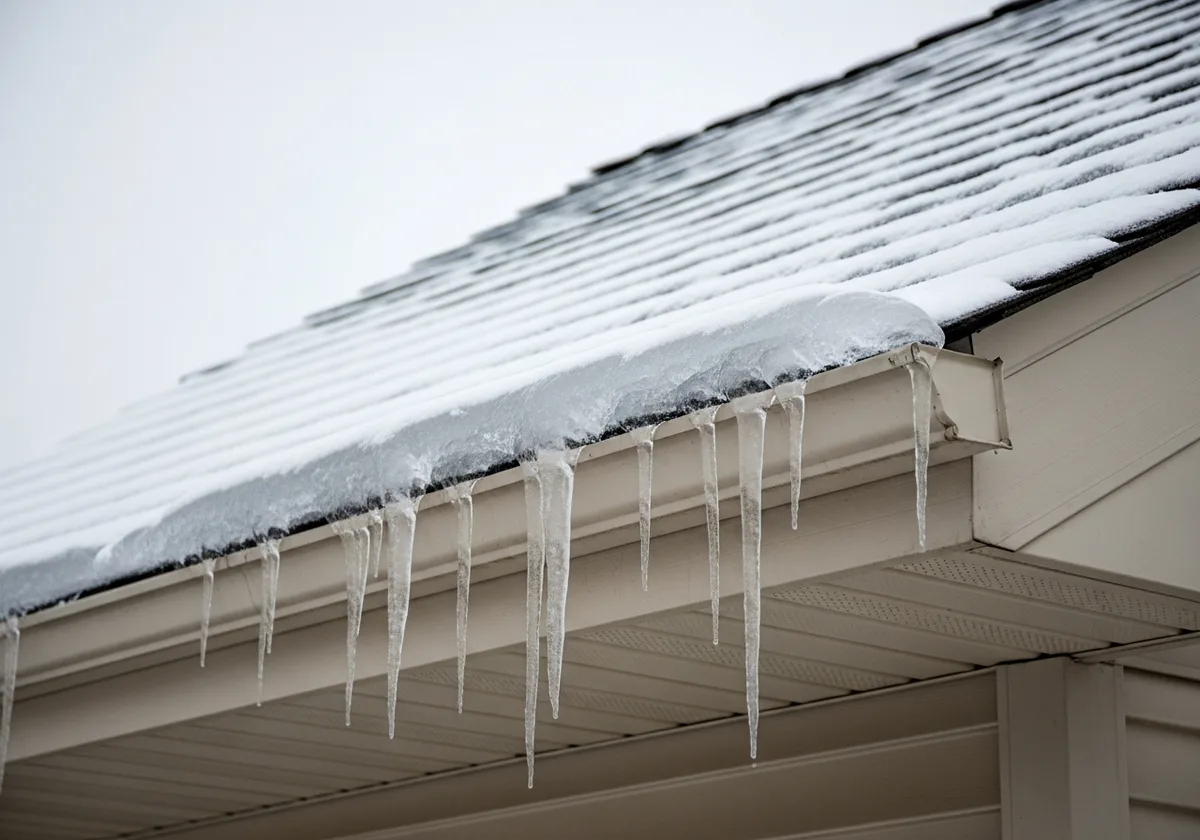
The other winter risk: weight, not just water.
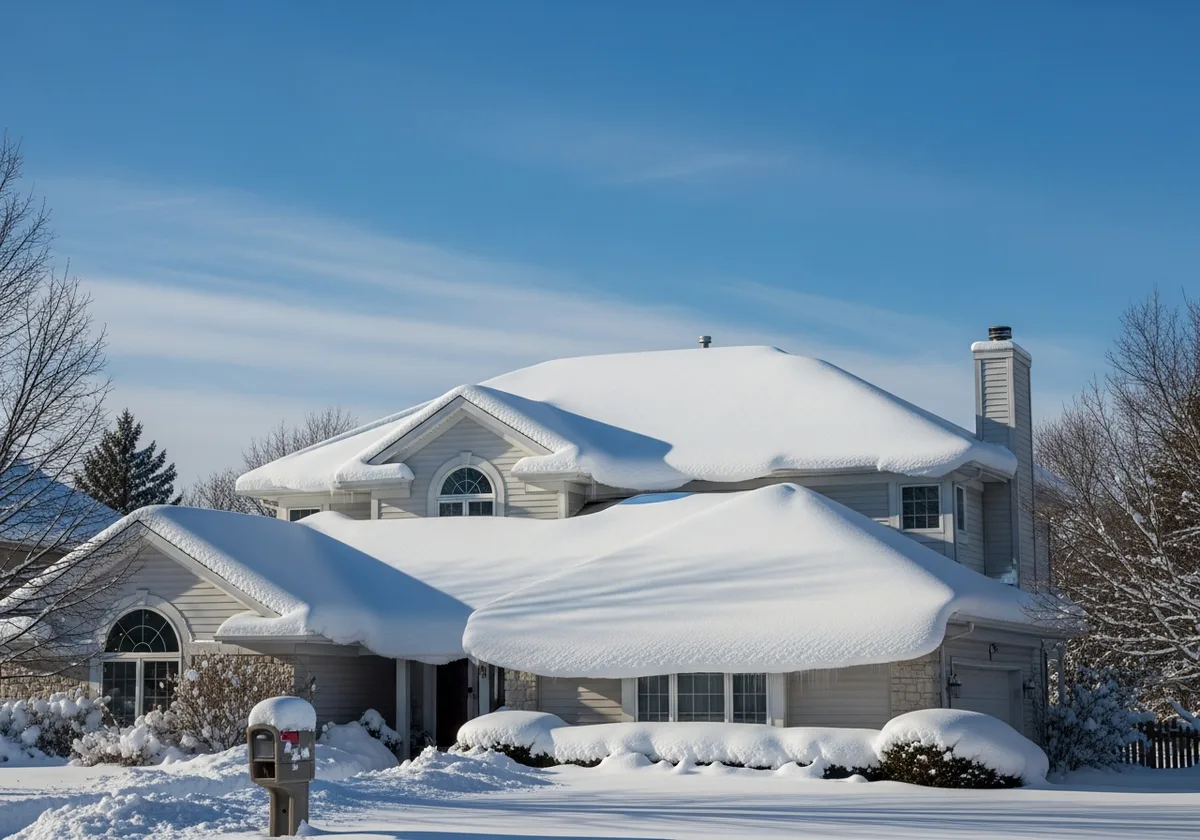
A roof under a heavy, wet snowpack is carrying real structural load, and the amount of snow sitting on it matters less than how much that snow actually weighs.
There's no single safe weight limit to check your roof against — snow load capacity is set by local building code, calibrated to what a given region typically sees, and it varies by roof age, framing design, and any past modifications. What's worth knowing instead is that wet, rain-soaked, or repeatedly freeze-thawed snow can weigh dramatically more than the same depth of fresh powder, so a shallower layer of heavy snow late in the season can be a bigger load than a deeper layer of dry snow earlier on. And the warning signs of real structural stress are worth knowing regardless of the exact number: a sagging roofline, new or widening cracks near the roofline, doors and windows that suddenly stick, popping or cracking sounds, and visible sagging in a garage, porch, or other lighter-framed structure attached to the house.
Valleys, the spot where a taller roof section meets a lower one, and low-slope or flat sections all carry more load than the rest of the roof, because snow drifts and pools there rather than shedding naturally. Routine snowfall on a sound, properly pitched roof usually doesn't need clearing — a roof rake worked from the ground along the lower few feet is the safest thing to reach for when it does, though it's worth knowing that clearing the eave does much more against ice dams than against structural load, which sits mostly higher up the slope. Anything requiring you to actually get on the roof is a job for a professional, not a homeowner with a ladder and a shovel.
The slower damage: what repeated freeze-thaw cycling wears down.
Ice dams and snow load are acute, storm-by-storm risks. Freeze-thaw cycling is the quieter, cumulative one — the same water-into-ice expansion happening over and over, in small amounts, across an entire winter and every winter after it.
Water that gets into a small crack, a worn seal around a pipe boot or flashing, or a gap in aging caulking expands as it freezes, widening whatever opening it found. It thaws, the water recedes, and the next freeze finds a slightly bigger gap to work with. Repeated over a winter's worth of freeze-thaw cycles — and this pattern hits hardest in climates that swing back and forth across freezing rather than staying reliably cold — this is how small, ordinary wear points turn into real leaks over a few seasons, independent of any single dramatic storm. It's also part of why a roof already showing granule loss, curling, or aging flashing tends to decline noticeably faster through a rough winter than a newer, well-sealed one: freeze-thaw damage compounds on whatever weaknesses already exist, rather than creating new problems out of nothing.
When any of this becomes an insurance claim.
The line most policies draw is between sudden, accidental damage and gradual deterioration — and it's the single biggest factor in how a winter roof claim gets treated.
An ice dam that forms during a storm and forces water under the shingles within days generally reads as sudden, accidental damage — the kind most homeowners policies are built to cover. Freeze-thaw wear that's been slowly opening the same small gap for several winters running, without ever being addressed, reads much more like gradual deterioration — the kind most policies exclude. Structural damage from the weight of ice and snow is a different question again — on most standard forms it's a separately named peril in its own right, so it's often more clear-cut than the ice-dam water claim, though forms typically carve out things like fences, patios and pools. None of this is a rule that applies identically to every carrier, every state, or every policy form, which is exactly why the insurance guide below doesn't hand you a single number or a state-by-state table — it walks through what to check on your own declarations page instead.
What consistently helps a real claim, regardless of carrier: photographing damage as soon as you spot it, tying it to a specific event rather than "sometime this winter," taking reasonable steps to prevent further damage and keeping the receipts, and getting a written contractor assessment that distinguishes new, storm-related damage from anything that was already there. The insurance guide below covers this in full, including the maintenance argument carriers sometimes make on a repeat claim at the same spot.
Four guides to winter roof damage.
From what actually causes ice dams and the fix that lasts, to the signs of real damage, how much snow your roof can handle, and what a winter insurance claim actually covers.
What Causes Ice Dams on a Roof
Ice dams aren't caused by cold weather or heavy snow on their own — plenty of roofs in plenty of snow never get one. They're caused by heat escaping from the house into the attic and warming the roof deck unevenly. Understand that mechanism and the rest of this — why some roofs are worse than others, and why heat cables are a band-aid rather than a fix — falls into place.
READ GUIDE →Ice dams · IdentificationSigns of Ice Dam Damage on Your Roof and Ceiling
An icicle hanging off your gutter isn't damage by itself — plenty of roofs grow icicles every winter with nothing to show for it inside. The signs that actually matter are the ones that tell you water found a way past the shingles, and they don't always show up where you'd expect. Here's how to tell a cosmetic ice buildup from one that's actually leaking.
READ GUIDE →Ice dams · Snow loadHow Much Snow Can a Roof Handle?
There's no single number that answers this for every house — snow load capacity is set by local building code, and codes vary enormously by region because they're written around what that region typically sees. What you can actually work with are the warning signs a roof gives when it's under real stress, and a sensible read on when clearing snow helps versus when it's unnecessary risk.
READ GUIDE →Ice dams · InsuranceDoes Insurance Cover Ice Dam Damage?
Often, yes — but the details vary enormously by carrier, policy and state, and the single distinction that decides most of these claims is whether the damage looks sudden or gradual. Here's how that distinction works, what's typically covered when an ice dam causes interior damage, what tends to get pushed back on, and how to document a claim well. Check your own declarations page for the specifics — nothing here is a substitute for that.
READ GUIDE →