The official definitions
Policy language typically defines cosmetic damage as something that changes the appearance of the property without affecting its usefulness or shortening its expected lifespan. Functional damage, by contrast, compromises the property's ability to do its job or shortens how long it will last. The distinction exists for a reasonable underwriting purpose — a carrier shouldn't have to buy a roof simply because it changed color. Where it breaks down is that a lot of real hail damage sits between the two definitions: it looks minor on the day of the inspection and becomes a functional problem over the following one to three years as the bruised spot keeps shedding granules. A single inspection is a snapshot, and the definition is about a trajectory, which is why the same shingle can be honestly described either way depending on who is looking and when.
What's clearly functional damage
These are generally treated as functional damage, though every policy's language should be read for itself:
- Hail bruises where granules have been crushed into the asphalt mat, compromising UV protection at that spot
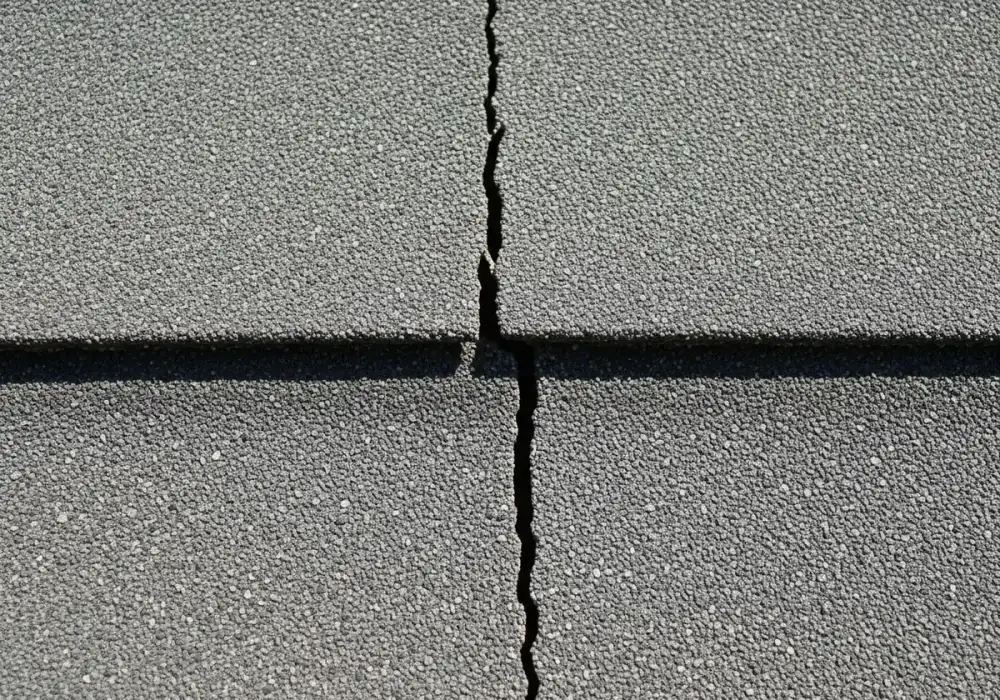
- Cracked or split shingles, where water can now penetrate directly
- Missing or partially missing shingles, which are no longer providing weather protection at all
- Lifted or creased shingles where the adhesive seal is broken and will fail in the next significant wind event
- Damaged underlayment or felt paper, which lets water reach the deck
- Damaged or missing flashing, which is an active leak path
What's typically treated as cosmetic
These are commonly classified as cosmetic, though carrier practice varies enough that you shouldn't assume any single item on this list applies the same way under your own policy without checking:
- Color variation across the roof from prior spot repairs
- Algae or moss streaks — cosmetic in most cases, unless coverage is dense enough to be holding moisture against the shingle
- Light surface scuffing from foot traffic
- Staining from leaves, tree fruit, or bird activity
- Dimples on soft metal like gutters and downspouts — some carriers pay on these as evidence of hail impact, others classify them as cosmetic regardless of what they imply about the roof
Metal components: a separate case worth checking
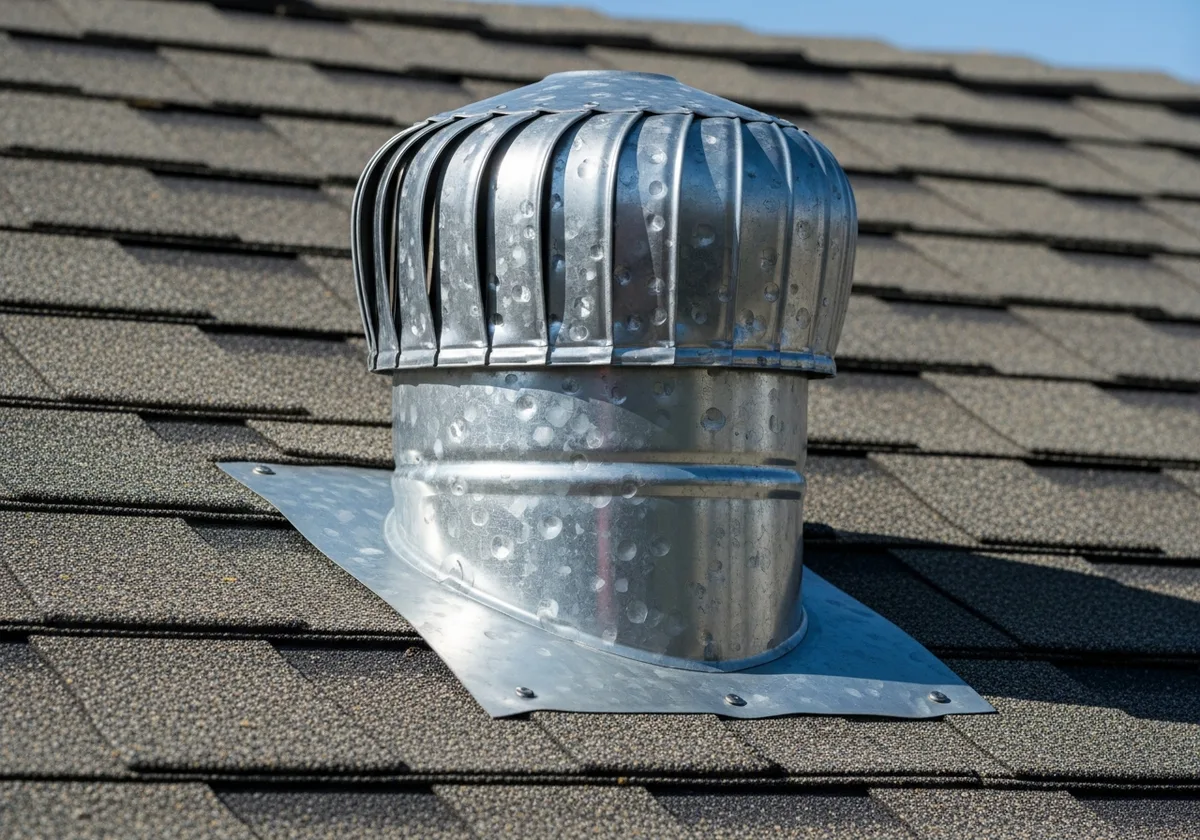
Vent caps, flashing, and roof-mounted metal hardware take hail impact differently than shingles do — they dent rather than bruise, and a dent doesn't automatically mean the component has failed. A turbine vent or pipe boot with visible dimpling but intact seams and flashing is often still doing its job, which is exactly the kind of borderline case where 'cosmetic' and 'functional' genuinely diverge from each other rather than one just being a euphemism for the other. The distinction matters for the claim: dents alone, with no leak and no compromised seal, are a reasonable case for a cosmetic classification, while a dent that has also cracked a seam or loosened a fastener is a different, functional situation.
The gray area carriers exploit
This is where most real disputes concentrate, and where it's worth pushing back with specifics if you believe the classification is wrong rather than accepting a first-pass label at face value:
- Hail bruises with 'minor' granule loss — sometimes classified as cosmetic on first review, even though UV exposure will progressively shed more granules over the following one to three years and the shingle will eventually fail there. This is functional damage in progress, not cosmetic damage that happens to be visible
- Granule loss without an obvious bruise shape — sometimes labeled 'wear and tear,' but if it's localized and appeared right after a documented storm, that's a reasonable basis to push back
- Dented metal roofing panels — often still functionally sound with cosmetic-only dimpling, so a denial here is sometimes correct, but check whether seams or fasteners were also affected before accepting that
- Single-slope damage — sometimes scoped as 'repair only,' but many installs need slope-matching that isn't possible with a discontinued shingle line, which can force a full replacement argument even when only one slope shows damage
Cosmetic-damage exclusion endorsements
Some homeowners policies, more often in hail-prone states, include an explicit endorsement that limits or excludes payment for hail damage to roofing materials that don't currently leak, even when the shingle's remaining lifespan has been shortened. These endorsements are becoming more common in some markets and are often buried in policy language rather than called out clearly. Check your declarations page and policy jacket for phrases like 'cosmetic loss exclusion,' 'roof surface limitation,' or 'matching limitation.' If your policy has one, hail claims specifically will be harder to win, and it's worth understanding that before a storm hits, not after. If you're shopping for a policy, or your renewal is coming up, this is worth asking about directly rather than discovering it for the first time in a denial letter — an agent should be able to tell you plainly whether the policy in front of you carries this kind of endorsement.
How to make the functional-damage case
If a claim comes back denied or scoped down as cosmetic, this is the general playbook:
- Get a written report from a licensed roofer stating specifically why the damage will lead to functional failure and roughly when
- Document granule loss with something measurable — photos with a reference object for scale, or a granule count if your roofer offers one
- Ask your roofer whether their state or region has established guidance on treating hail-bruised shingles as functional damage; this varies and isn't universal, so don't assume it applies to you without checking
- If your state has an insurance commissioner's office, they can tell you whether cosmetic-exclusion disputes are common in your area and what your options are
- A written complaint to the state insurance commissioner is a real option if you believe the denial is unreasonable, and it's worth following through on if the amount at stake justifies it
- A public adjuster, if the claim is large enough, specializes in exactly this kind of argument and can often move a stalled appeal further than a homeowner arguing alone
Matching: the argument that decides slope-versus-whole-roof
A cosmetic classification and a matching dispute often arrive together, because both are ways of paying for less than a full roof, and the second one is the more winnable of the two. If an adjuster scopes one damaged slope, the practical question is whether the replacement shingles will match the rest of the roof — and on a roof more than a few years old, they frequently won't. Shingle lines get discontinued, color blends get reformulated, and the granules on the existing roof have already weathered away from their original shade. Some states have regulations or bulletins requiring a reasonably uniform appearance after a repair, and where they apply, a demonstrated inability to match is a direct route from a one-slope scope to a full replacement. This is worth handling as its own argument, with its own evidence, rather than folding it into a general disagreement about the settlement:
- Find the shingle's product name and color. Your original roofing invoice, the permit file at your building department, or a leftover bundle wrapper in the garage are the usual sources
- Ask a supplier, in writing, whether that product and color are still manufactured. A supplier's written 'discontinued' confirmation is the piece of evidence that actually moves this
- Photograph a new shingle laid against the existing roof in daylight if you can get one, because weathering shifts color even within a line that is still in production
- Ask your state's department of insurance whether it has a matching regulation or bulletin. Some do, some don't, and the answer changes what you're arguing about
Why the shingle manufacturer usually can't help
It's a natural next thought when a carrier calls hail damage cosmetic: if the shingle failed, isn't that the manufacturer's problem? Almost always no, and it's worth knowing before you spend weeks on it. Shingle warranties cover manufacturing defects — mat delamination, adhesive failure, color flaws traceable to production — and essentially all of them exclude damage caused by hail, wind above the rated speed, and other outside forces, precisely because that is what homeowners insurance is for. So a bruised shingle sits in a gap: the carrier may call it cosmetic and decline, and the manufacturer will call it storm damage and decline, and both are applying their own documents correctly. The one case where the manufacturer is genuinely the right call is a roof failing in a pattern that doesn't follow the storm — splits along the same line on shingles across every slope regardless of exposure, or widespread granule loss on a roof only a few years old with no storm history to point at. That pattern suggests a product or installation problem rather than an impact, and it is a warranty conversation. Everything that maps onto a dated storm is an insurance conversation, however the first inspection classified it.