Wind damage signs
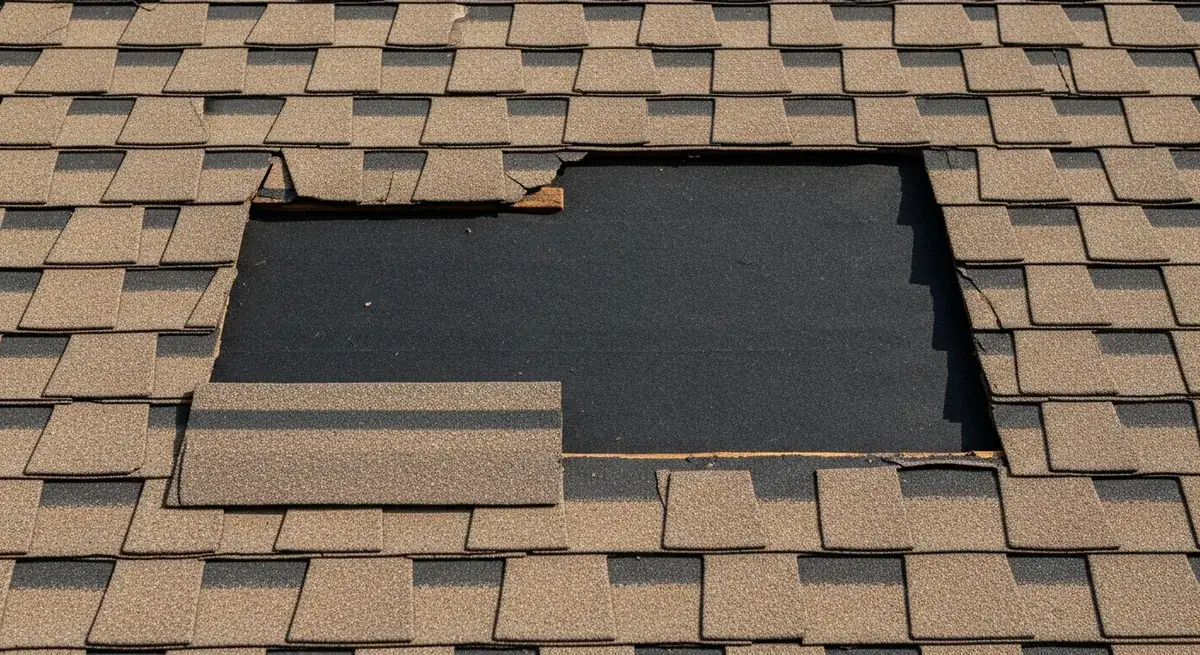
Wind damage tends to be easier to spot than hail damage because a lot of it is visible from the ground, and it tends to show up immediately rather than developing over the following weeks the way a hail bruise does. The most common signs, roughly in order of how obvious they are:
- Missing shingles — an entire shingle blown off, exposing the underlayment or bare deck beneath
- Lifted shingles — a corner or edge curled up where wind broke the adhesive seal strip
- Creased shingles — bent along the seal line; the seal is broken even if the shingle hasn't blown off yet, which means it will eventually
- Diagonal damage patterns — wind damage often runs in stripes following the direction the gusts came from
- Missing ridge cap — ridge cap shingles sit at the most exposed point of the roof and are frequently the first to go
- Debris strikes — branches, lawn furniture, or blown signage physically hitting and gouging the roof
Hail damage signs
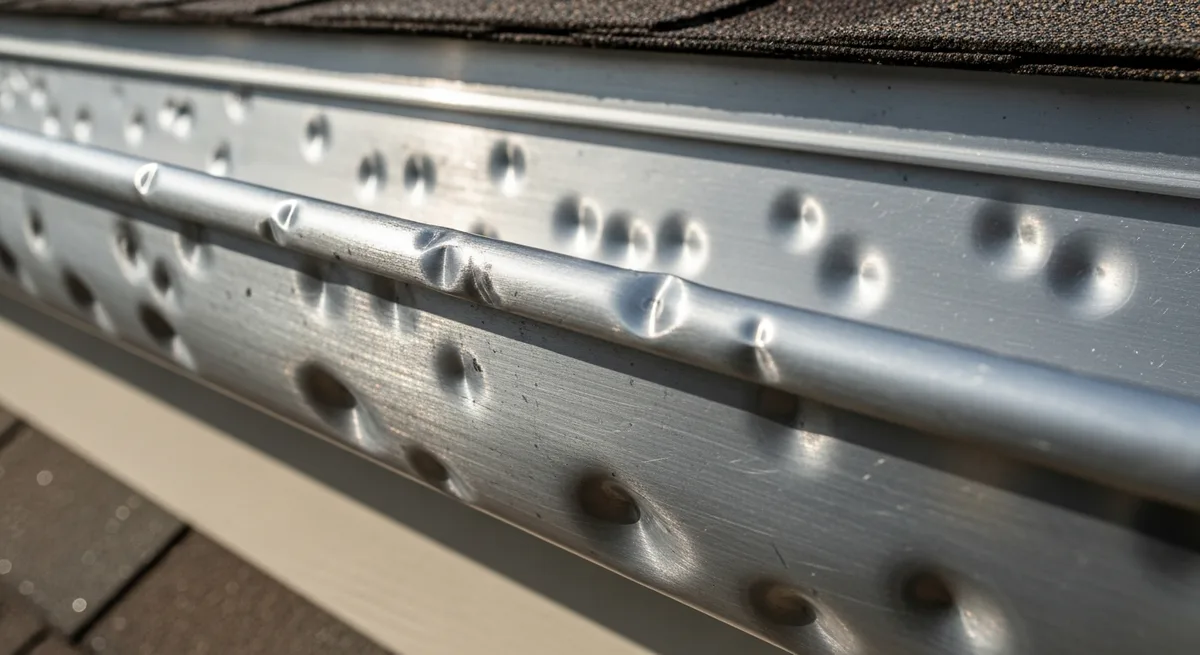
Hail damage is harder to see. Bruises are small, roughly coin- to quarter-sized, randomly distributed, and don't change the shingle's shape the way wind damage does. The hallmarks:
- Round, dark spots where granules are missing in a roughly circular pattern
- Random distribution across a slope rather than the stripes or rows typical of wind
- Dented soft metal — gutters, downspouts, AC fins — almost always check these first
- Damage concentrated on the slope(s) that faced the storm
- Often subtle right after the storm and more obvious weeks or months later, as the bruised spots keep shedding granules
Side by side: how to tell them apart
When a roof shows a mix of both, or you're not sure which you're looking at, these are the tells that separate the two most reliably.
| Signal | Wind damage | Hail damage |
|---|---|---|
| Visible from the ground? | Usually yes — missing or lifted shingles stand out | Usually no — bruises need a close look |
| Pattern on the roof | Diagonal stripes following gust direction | Random, scattered dots |
| What it does to the shingle | Tears, lifts, or removes it entirely | Crushes granules into the mat, leaves it in place |
| Soft-metal indicator | Bent vents or torn flashing, less consistent | Dimpled gutters, downspouts, AC fins — very consistent |
| How it changes over time | Damage is visible immediately and doesn't worsen much on its own | Often looks minor at first, then sheds more granules over months |
Why the two get confused so often
Part of the confusion is that wind and hail arrive in the same storm system almost by definition — the same thunderstorm cell that drops hail is usually also producing damaging gusts, so a roof rarely shows a clean case of one without any of the other. The other part is that hail-damaged shingles can eventually fail in a way that looks like wind damage: a bruised, weakened shingle is more likely to tear loose in an ordinary gust months later than a healthy one would be, which means a 'missing shingle' you find well after a hailstorm might actually be a delayed hail failure rather than fresh wind damage from a separate, smaller event. This is one more reason documentation matters more than the label — if you can tie the timing back to a known storm, the mechanism becomes much easier to establish.
What insurance covers — and the gotchas
Both wind and hail are 'covered perils' on most standard US homeowners policies, and both should pay out once you can show the damage happened during a storm. Policies differ enough on the details that you should check your own declarations page rather than assume any of this applies to you, but a few patterns come up often enough to flag:
- Some policies carry a separate wind/hail deductible, often a percentage of your dwelling coverage rather than a flat dollar amount, and it can be meaningfully higher than your regular deductible
- Coastal states in particular sometimes apply a separate 'named storm' deductible that's higher still and applies only to hurricanes and named tropical systems
- Cosmetic-damage exclusions are increasingly common in some carriers' policies in hail-prone states — they can deny hail bruises that haven't yet progressed to a visible crack, and they sometimes reach gutters and siding as well as the roof surface
- Actual cash value (ACV) policies depreciate the payout based on your roof's age, so an older roof nets less than full replacement cost even on an approved claim
Filing a combined wind + hail claim
Most damaging storms produce some of both. If your roof shows both types of damage, file one claim covering everything rather than splitting it into separate wind and hail claims — multiple claims from the same event invite more scrutiny and can affect renewal terms down the line for no real benefit. Document both damage types clearly in your photos, and make sure your contractor's estimate and the adjuster's scope of work both account for everything you found. If the adjuster's initial scope only covers one type of damage, that's a supplement request, not a second claim.
- Photograph wind and hail damage separately, even within the same claim, so each is clearly documented on its own terms
- Ask your contractor to itemize the estimate by damage type rather than a single lump-sum figure — it makes a supplement request far easier to justify later
- Note the storm date once, and reference it for both damage types rather than treating them as two separate events
When you're not sure which one it is
It's common to find a mix of damage and not be confident which storm mechanism caused which part of it — and honestly, it doesn't always matter for the claim itself, since both are typically covered perils under the same policy language. What matters more is documenting everything you find, tying it to a dated storm event, and letting a licensed roofer's written inspection do the technical sorting. If you want a dated, address-specific record of what actually hit your area before you call your carrier, RoofTap's free hail-report-by-address tool checks NOAA and NWS storm reports within 10 miles of your address over the past 12 months and gives you a claim-worthy verdict along with the full event list.
The seal strip: why a creased shingle counts even though it's still there
This is the mechanism behind most wind claims, and it's the part homeowners most often talk themselves out of. Asphalt shingles aren't held down by their nails alone. Each course carries a strip of heat-activated adhesive along its face, and once the sun has cured it, the shingle above bonds to it and the whole slope behaves as one sealed surface. Wind damage usually starts by breaking that bond: a gust gets under the leading edge, peels the tab back far enough to snap the seal, and then drops it again. From the ground, and often from the roof, the shingle looks perfectly normal afterward — it's lying flat, it's still nailed, nothing is missing. What has actually changed is that it will not re-seal, because the adhesive strip has already been used. That shingle is now a loose flap waiting for the next ordinary storm. A crease running horizontally across the tab, a slight lift you can get a finger under without force, or a tab that flutters when a breeze catches it are all the same finding, and they are legitimately claimable as functional damage even with no hole in the roof and no leak inside.
How the two get scoped differently
The label matters less for whether you get paid than for how much, because wind and hail are usually scoped in completely different shapes. Wind damage is generally scoped as a spot repair: the adjuster counts the specific shingles that are missing, creased or unsealed and prices replacing those, plus the labor to get to them. Hail is generally scoped by slope — an adjuster who finds damage above a density threshold on a slope will typically write that whole slope, because you can't meaningfully replace scattered individual shingles across a field of bruises. That difference is why a roof with obvious wind damage and subtle hail damage can settle for far less than the same roof scoped the other way round, and it's the practical reason to make sure the hail gets documented even when the wind damage is what caught your eye. Two knock-on effects are worth knowing before the adjuster arrives:
- A repair scope depends on matching shingles being available. If your shingle line is discontinued or the color has weathered out of range, that's a specific argument for replacing the slope rather than patching it — raise it early, with the product name off your original invoice if you have it
- Wind scopes are more likely to miss the roof's accessories. Ridge cap, starter course, pipe boots and drip edge all have to be replaced when the field shingles around them are, and they're common omissions in a first-pass scope